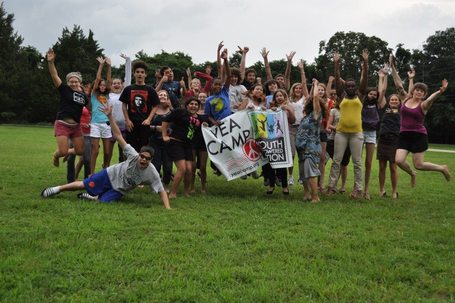
Melissa Gates, Director of Programs at Catskill Animal Sanctuary shares her recent experience teaching kids, and tells us about the wonderful Camp Kindness vegan summer camp! It's a one-week long day camp run by trained humane educators that gives kids the opportunity to interact with farm animals, while inspiring them to make kind, compassionate choices for all. Check out this one-of-a-kind camp, and register your kids-- they will love it!


Guest Post by Melissa Gates, Director of Programs at Catskill Animal Sanctuary
Ten Girl Scouts, ranging in age from nine to eleven years old, playfully traipsed after me in their sparkling new designer galoshes as I led them from Catskill Animal Sanctuary’s Welcome Hut around into the sloping potbellied pig field for their Volunteer Day.

“Are we going to scoop…pooooop?” asked one girl, her voice rising upward like a slide whistle accompanied by a face contorted into unspeakable crescendos.

“It would be very nice of us,” said I, raising a pitchfork to my side and motioning for the girls to circle around, “as these little loves depend upon CAS to provide them with proper affection, food, water and shelter. Part of that entails scooping up their poop every day.”

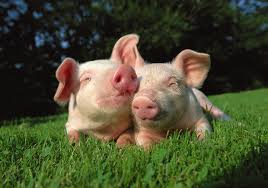
The potbellied pigs eyed the group of girls, snouts to the air and tails wagging, perhaps wondering if the day would bring treats or belly rubs or even better…both. This porcine crew knows the group volunteer gig pretty well. The shy pigs wander off to private corners, where they know we will respect their privacy. Suspicious pigs stand at a distance, smelling and rooting and planning and waiting. The extroverts wander over and introduce themselves with little nudges of their wet, sensitive noses against willing hands, legs and giggles. Shy Girl, who is, as her name implies, normally a quite timid resident at CAS, has days where she will waddle over to check out groups. Chopper, who eagerly falls over sideways at the mere suggestion of a hand heading toward his belly, can have shy days, too. Pigs, just like people and all other animals, have their moods. Today wasn’t one of those days for our friendly guy, Ozzie. He sauntered over, tail flailing a mile a minute with a clear look of warmth upon his face as his nose wiggled and pointed, smelling from girl to girl, likely anticipating his healthy dose of love and affection for the day, but not before…

One pointed finger became two then five then ten until a pitchy horror of shrieking girl chorus erupted,“EeeEEEEeeeeEEEw! He’s pooping NOW!”

At times like these, teaching moments choose us; those of us brave enough not to shy away from the challenge of poop discussions with little girls sporting designer galoshes in pink and yellow polka dots know what we must do. For those of us who make the conscious decision not to dilute the poop topic but rather to embrace the opportunity for heightened compassion, these moments are precious...even when faced with little girl squeals.

“Everybody poops, right?” I asked, looking around from surprised to disgusted to embarrassed faces. “This is Ozzie. He and other pigs are actually quite courteous when they go to the bathroom,” I continued. “When given the amount of space they need, pigs use one area for their bathroom breaks, another area for eating and yet another area for sleeping! What do you think would happen if our pig friends didn’t poop?”

“We wouldn’t have to pick it up!” exclaimed one child, affirming my theory that there really is at least one silly kid in every group.

“Hmmm. True,” I answered.“But how do you feel when you don’t go to the bathroom when you need to go?”

“Bad. My tummy aches and I feel bad if I hold it too long,” said another.

“Right; and we wouldn’t want our pig friends to feel that way, would we?” All the girls’ heads nodded no, emphatically. “Plus, what can most people do that pigs and other animals can’t, to our knowledge?”

“Excuse themselves to go to the bathroom!” hollered one girl, hand waving over her head. 
 
“That is a very astute point.” I replied. “There is something else humans can do that not many other animals can. What do you think that might be?” Hands shot up. I lifted a brow and extended an inviting hand to one girl who looked as though she might burst if she kept her answer in any longer.

“Ask their moms to drive cars to other bathrooms!” she sang out. Kids come out with the darndest things.

“Also a very good point,” I said. “So when you decide to excuse yourself or when you decideto ask your mom for help, rather than going to the bathroom on the floor, what is it you’re doing?”

“Deciding!” came a shout from one girl, who had really listened as I hung on the word decide.

“Exactly!” I encouraged,“Humans have the gift of intellect, which helps us make good decisions and come to correct conclusions about what is true or real and about how to solve problems. Other animals are smart and can learn human words and signs, and are very often effective at initiating communication and interaction with people. Animals have family units and friends; they think, feel love, suffer pain, and communicate with one another the same as we do...but in their own languages. They do not have the same level of advanced intellect that humans have, though, so in a human-powered world, this often puts animals in danger of being hurt, like if they were left out in fields full of their own poop, which would distress them and could also make them physically sick. This is one of the many kind ways in which people can take care of animals. We pick up their poop in the same way that we take care of our baby brothers’ and sisters’ poop when we help change their diapers.”

“Hey, why don’t pigs wear diapers?” asked the one quota-filling silly girl, with a practiced look of sincerity. I walked right into that one. 

The girls and I talked a little more about what it means to allow animals the dignity of their nature, to allow pigs to poop in their latrine area, to allow chickens to flap their wings, to allow cows to live free from milk machines, to allow the planet to live free from pollution, and to allow people the right to live free from wrongful discrimination. 

It wasn’t long before the girls were ambitiously scooping poop and satisfying Ozzie’s loving need for affection. They understood the good they were doing to help our pig friends, and with this newfound understanding and context of the help they were providing, the girls were happy to open their hearts to a stinky but necessary chore in order to lend a hand. The fires of compassion grew stronger in the girls’ hearts that day as their perspectives and experiences widened to include animals


I got to thinking, this really is the foundation for Catskill Animal Sanctuary’s Camp Kindness program, our vegan summer day camp for kids. At Camp Kindness, we offer kids opportunities for deciding to live with greater compassion. We provide facts about the impacts of animal-based agriculture on animals, people and the planet and we empower kids to think critically about
this wonderful world we share. Telling a child that he or she should be kind to animals is a nice start; teaching kids that they each have the power to lead lives based upon deciding to be nice to animals is a world-changing paradigm shifter.

At Camp Kindness, trained Humane Educators work closely with the small camp groups to empower each child to think freely, carefully and independently, and to arrive at their own conclusions and truths, as guided by the spirit of compassion for all. 

The age-appropriate lesson plans are mapped out well in advance of the four one-week long camp sessions, but each is molded like clay as it unfolds to meet the shifting needs of the individual kids and to positively reflect the group dynamic in order to bring out the best in each child. 

Kids are encouraged to think critically about food production issues, animal rights, the environment and their own health at Camp Kindness. One-on-one interaction with our animal friends is a key aspect of camp, enabling kids to learn about animal behavior and personalities as well as animal care. 

Kids leave camp understanding that every animal is a unique individual, which helps those who do not otherwise have an opportunity to mingle with traditionally farmed animals. Everyone leaves feeling supported and knowing that they are not alone; that feeling compassion for animals is indeed a wonderful and inspiring thing.

At Camp Kindness, kids are presented with facts and asked to think creatively and compassionately, and they leave with plenty of tools from which to choose, from vegan cooking skills and recipes to journaling for expressing feelings to growing their own food and gaining experience with animals and getting to know the personalities of a few critters. Camp Kindness helps to reinforce what compassionate parents teach their children every day; that all animals are thinking, breathing, feeling beings worthy of our love and respect; that we may each positively impact the world by deciding to make compassionate choices; that being kind to one another, to animals and to the planet feels good!

I left CAS at the end of this Girl Scout Volunteer Day feeling a strong sense of hope for the future and really looking forward to this year’s Camp Kindness sessions. If we can encourage little girls in glittering galoshes to set aside their dislike of poop in order to lend a hand to pigs in need, we can do just about anything, including making the world a more compassionate place...one child at a time.


To learn more about Camp Kindness or register your child for a session, click here:

To learn more about other CAS programming this season, including the weekend-long Vegan Parenting Workshop in July, click here.


Melissa Gates has directed two statewide animal rights organizations and is currently serving as the Director of Programs at the Catskill Animal Sanctuary in Saugerties, New York. She is a longtime vegan  and community organizer for animals, people, and the planet, with nearly  two decades of experience in the field. When not engrossed in her work, Melissa can often be seen out & about advocating for justice, hiking, exploring New York's live  music scene or snuggling up by her fireplace with some great jazz, a  good book & feline friends Eden-Shade, Mama Shed, Sumo Monster, Cito Mosquito Fernandez Jones & Levon Whitey Gates. 
 
 
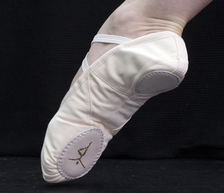
This is one of those posts that gives me hope and a glimpse into what the future can (and should) look like. If we all start voting with our dollars, it can be a future where everyday items such as food, clothing, and personal & home products are replaced with cruelty-free vegan replicas. For example, if we can make clothes and accessories that look, feel, and function the same as those that are non-vegan, then we are on our way to a more compassionate, just world-- one that doesn't exploit animals. In this post, professional dancer, Cynthia King brings us one of these items....beautiful vegan ballet slippers! Read and share this post with other parents...

Picture
Vegan Ballet Slippers

I first made the connection between the animals that I loved and the food on one’s plate years before I was a professional dancer, at age 10. It drove me to become vegetarian, then vegan. Later it guided me to create Cynthia King Vegan Ballet Slippers
 
Dance celebrates the beauty of life. It’s true that some dancers suffer for their art, but people who do that have chosen to. Animals who suffer for the sake of performances whether because they are performing or their skins are being used for dance shoes have no say in their fate. As a dancer, and a vegan, I didn’t want any animal to suffer for the sake of my art. As a young dancer I searched for a vegan ballet slipper and had no success finding a suitable alternative. When I became a teacher, students and their parents asked me to recommend shoes--there just were no good ethical options available. That’s when I decided to create my own vegan ballet slippers. After a lengthy development process, the first shoes were ready in 2003. Today 
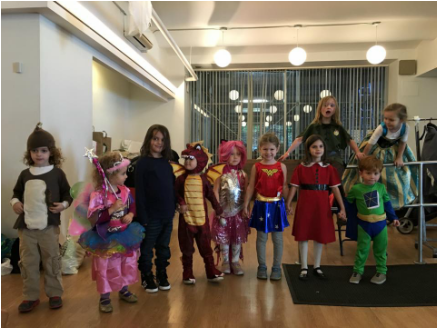
Cynthia King Vegan Ballet Slippers come in three colors (peach pink, pastel pink, and black) and are sized for children and adults, suitable for both male and female dancers. They are the only ready-to-wear vegan slippers produced worldwide, and the orders we receive from around the globe reflect that. The slippers have seen their share of the spotlight too, having been secured for Voguephoto shoots as well as being used by Alvin Ailey dance camps to outfit their campers. Not too long ago young Cynthia King Dance Studio students participated in a photo shoot (pictured below) featuring the vegan ballet slippers at Woodstock Farm Animal Sanctuary. It helped the dancers to connect the vegan slippers with the individual animals they were saving by wearing them.  It warms my heart each time an order comes in, because I know that every pair purchased means that someone has chosen compassion over cruelty. And I love seeing them on all of my young students’ feet, knowing that no animals have suffered for the sake of their dance.


Picture
Dancers with vegan ballet slippers at Woodstock Farm Animal Sanctuary.


In addition to my vegan ballet slippers, I create a lot of dance pieces at Cynthia King Dance Studio (my school in Brooklyn) that are about animals. I’ve choreographed dances that celebrate the ways animals move, and one that served as an exposeé about animals in entertainment. Recently I created a piece titled, “Dinner” in which dancers played animals on a plate and then performed as ghosts of their former selves describing in movement what it was like to be alive. I’m looking forward to staging another production in October 2012 that will again take on animal issues through the art of dance.

I’m very interested in community, as well; both participating in the ones I am a member of, and creating community at Cynthia King Dance Studio. One way of fostering community that I am especially fond of is holding vegan events at my studio. Not too long ago, I hosted “A Children’s Celebration of Farm Animals,” with children dancing as animals and author Maya Gottfried reading from her picture book, Our Farm: By the Animals of Farm Sanctuary. More recently I held a screening of Marisa Miller Wolfson’s wonderful documentary, Vegucated at the studio, followed by a reception featuring hors d’oeuvres by Brooklyn vegan restaurant, The V Spot. It was a wonderful way to bring all of my worlds together.

Editor's Note: You don't have to be a vegan to buy these vegan ballet slippers. If you care about animals, and want to help reduce their suffering one step at a time, this is a perfect way to make a difference. Order a pair for your child and be proud that you are choosing compassion over cruelty. Your kids will feel proud too!  

Cynthia King
, a professional dancer since 1978, has been teaching and choreographing for children and adults since 1986. She trained extensively at the Boston Conservatory and The Ailey School, honing her skills under the tutelage of legendary dancers including Carmen De Lavallade, and Rod Rodgers of whose dance company she was a member. Ms. King has been credited by the New York Department of Education with developing “…one of the most comprehensive dance programs in the district.”
In 2002, Ms. King launched the Cynthia King Dance Studio where her innovative curriculum embraces classical to emerging styles including ballet, tap, modern, B-boy/B-girl, and hip hop. Combining her passion for dance and compassion for animals, Ms. King developed ready-to-wear cruelty free, vegan ballet slippers. The slippers are popular worldwide and are the required slipper for two of Alvin Ailey American Dance Theater's innovative camps. Ms. King is an energetic community member and activist, having served on the Board of Flatbush Family Network, Vote Humane, and Windsor Terrace Alliance, and currently serving on the Board of Directors for Woodstock Farm Animal Sanctuary. She and the studio proudly support the PTAs of local public schools, DanceNYC, Our Hen House, Farm Sanctuary, and Animals Asia. Ms. King lives with her husband, two sons, two dogs and one cat in Kensington, Brooklyn.


This post is in honor of all mothers, specifically those suffering on factory farms.


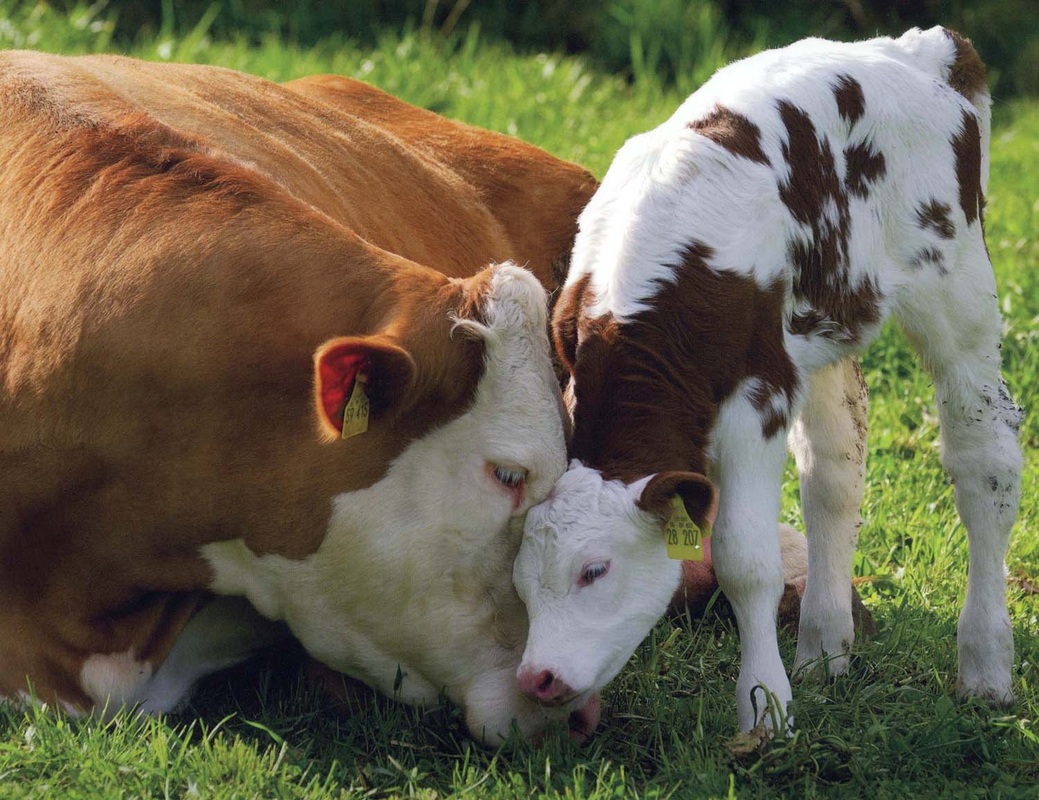
Since Mother’s Day is almost here, I thought it’d be the perfect time to write a post about some of the overlooked mothers in this country: Dairy cows.

Dairy. What a sham. Where should I start…the health issues, animal cruelty or the environmental path of destruction created by the dairy industry. Let me first start by addressing the myth that so many of us are still dearly attached to. Nearly all of the dairy cows in this country today live in filthy, cramped quarters on industrial factory farms. They don’t live on Old McDonald’s Farm in a big, red, cozy barn grazing outside on a sunny, green pasture alongside their kin. The year I became a mother myself, I wrote a blog post for PETA about dairy cows. Here’s an excerpt: 

Cows in the dairy industry live a miserable life they’re often treated as if they were nothing more than milk machines. Just like humans, cows produce milk to feed their babies. But on factory farms, the milk that cows produce goes directly to humans. The dairy industry forcefully impregnates millions of individual cows year after year to keep their milk supply flowing. They're frequently pumped full of hormones and antibiotics to increase their milk supply, as more milk equals more money. This physically demanding cycle takes a toll on the cows' health, and more than half the cows suffer from excruciatingly painful mastitis and lameness.


By the end of their lives, many of these cows are in so much pain and so weak that they can't even walk or stand, so workers callously drag them or push them with a bulldozer to a truck that is bound for the slaughterhouse. That's the thanks they get for providing humans with years of milk--a trip to the slaughterhouse to be made into ground beef. For their entire lives, cows on dairy factory farms are forced to stand indoors on concrete floors or are crammed into filthy, overcrowded feedlots. 

After being nestled in comfort and safety inside their mother for nine months, newborn calves are literally dragged away from their mothers just hours--sometimes only minutes--after entering the world. Female calves will face the same fate as their mothers: They'll replace her when her body gives out and her usefulness as a milk machine runs out. Male calves will be shackled by the neck 24/7 in a tiny crate, unable to even turn around. They are fed iron-deficient diets in order to produce the pale-colored flesh that humans prefer. The stress, loneliness, fear, and frustration that these babies must feel is heartbreaking. Then they'll be slaughtered, and their flesh,
labeled as veal, will end up on a dinner plate, where the person consuming it won’t think twice about it.

Read the entire post here.

These large corporate operations manage to decrease their costs through intensively raising hundreds or thousands of animals in small spaces, while they increase revenues by pushing the cows to produce more milk at whatever physical cost to the cow. They win, and the animals lose. The consumer also loses though, because their money supports a product whose production is
responsible for reeking havoc on the environment, harmful to our health, and has come from an animal who has been treated in ways that most of us would find objectionable. We end up with a huge stain on our conscience when we pay other people to do things that we couldn’t do ourselves.

The American Dietetic Association and the American Academy of Pediatrics both agree that "well-planned vegan and
vegetarian diets can satisfy the nutritional needs and promote normal growth of infants and young children." So if the experts on nutrition are saying that we don’t need dairy products, there is no reason to feed your kids dairy.
The idea that milk from a cow is somehow good for the human body is a farfetched notion held together by the super glue of habit and tradition. It’s shaped our minds and formed our decisions for many years, due in large part to the massive efforts of the dairy industry. However, many studies are debunking this nutritional myth by showing that not only is cow’s milk not beneficial to our health, but there are potential health risks associated with consuming it. Steve Wynn said it best when he called it, “liquid cholesterol.”  

The Physicians Committee for Responsible Medicine (PCRM) states “…clinical research shows that dairy products have little or no benefit for bones. A 2005 review published in Pediatricsshowed that milk consumption does not improve bone integrity in children. More
studies have shown that consuming cow's milk not only provides no protection against bone fractures but may also even increase one's risk of getting osteoporosis. For example, according to a new study published in the Archives of Pediatrics and Adolescent Medicine, active adolescent girls who consumed the most calcium, primarily from dairy products, had more than twice the risk of bone fractures of active girls who consumed the least calcium.

Similarly, the Harvard Nurses’ Health Study, which followed more than 72,000 women for 18 years, showed no protective effect of increased milk consumption on fracture risk. In fact, they found that those who consumed two or more glasses of milk per day had higher risks of broken hips and arms than those who drank one glass or less per day.

Also, according to a brand new
study published by the Harvard School of Public Health, “Calcium is important. But milk isn’t the only, or even best, source” and “It’s not clear, though, that we need as much calcium as is generally recommended, and it’s also not clear that dairy products are really the best source of calcium….plus, dairy products can be high in saturated fat as well as retinol (vitamin A), which at high levels can paradoxically weaken bones.” How’s that for irony? Harvard’s Healthy Eating Plate
calls for us to limit our consumption of milk/dairy. Their nutrition experts claim this guide is based on sound nutrition research and not influenced by food industry lobbyists. That’s a nice change of pace for once.

If milk does the body so “good” then why is it that the countries that consume the most milk are also the countries with the highest rates of osteoporosis- and vice versa. And the more animal protein that a population consumes, the higher the prevalence of osteoporosis.

Humans are the only species that drinks another species’ milk….and the only species that drinks milk past infancy into adulthood. Think about that for a minute. So why has a substance that’s meant to fatten up calves quickly become so revered as a necessary staple in households around the world. Could it have something to do with the billion-dollar marketing campaign that the dairy industry has conveniently marketed to us (and schools, gov'ts, doctors, etc) , and the entanglement of the USDA with our government/schools. If it is calcium and Vitamin D that we’re all after, there are far better sources that don’t involve housing tons of animals in warehouses and destroying the environment. So if you’re still consuming milk and other dairy products, consider kicking the dirty habit. If you compare a carton of cow’s milk to any of the alternative non-dairy milks on the market including soy, rice, almond or coconut milk, you’ll find that in terms of calcium and Vitamin D, they all contain at least the same amount as cow’s milk, and in fact, many actually contain more. Some almond milks even contain 50% more. Plus, non-dairy milks are usually fortified with high doses of other important vitamins and nutrients including iron and B12. Other good, non-dairy sources of calcium include collards, bok choy, spinach, fortified juices, beans.).

So that being said, why would you still want to consume cow’s milk? There’s really no excuse…other than you can’t get past your childhood experiences, and the brainwashing marketing ads that have been telling us for years that we need milk for our bones. That being said, I know how hard it can be to break away from the norm. It’s not easy to flip everything you know upside down. Parents especially want the best for their kids, so we’re relying on others, who we think are experts.  As kids many of us have been raised on glasses of milk at dinner, and hunks of cheese for snacks, so it’s hard to envision giving that up. But habit doesn’t make right or truth, so do your own research about the dairy industry…don’t let the industry itself determine what
your body does and doesn’t need.  

Picture
Whitewash: The Disturbing Truth about Cow's Milk and Your Health by Dr. Joseph Keon.

Need help making the transition? Start by reading
Whitewash: The Disturbing Truth about Cow’s Milk and Your Health by nutritionist Dr. Joseph Keon. In it, he unveils how we unwittingly sabotage our health every day by drinking milk, and he shows that our obsession with calcium is unwarranted. I also highly recommend a book written by the son of the founder of Baskin-Robbins, John Robbins, who wrote, Diet for a New America. Despite having grown up around an ice cream empire (including having an ice-cream shaped pool!), he now espouses dairy and advises everyone to avoid dairy. 

Also, check out
GoDairyFree.org and NotMilk.com for more resources.
Mother’s Day is the perfect time to show your support of all mothers. You can do this by ending your support of the dairy industry, which treats mother cows (and their babies) as commodities. 

HAPPY Mother’s Day to ALL! 
 
 
It's usually the parents who are writing blogs about raising vegetarian/vegan kids, so it's nice once in a while to flip the tables and hear directly from the young people themselves. I had the pleasure of interviewing Owen Ford-- a kind, smart, courageous, passionate teenage-girl who is making a difference for animals. Her parents should be very proud! Here are some of her thoughts on what it's like to be a vegan teenager.


Picture
Owen


Interview with Owen Ford, a vegan teenage-girl:

How old are you?
    I'm seventeen.

What age did you become vegan, and why?
    
I’ve been a vegetarian since second grade, when I began to get grossed out by meat. At that time, my Mom was a pescatarian, and while my Dad ate meat, both were very supportive. Then, when I was thirteen (almost fourteen), I learned about veganism. I had heard of it before but never knew much about it. After watching a DVD about food (I think it was one of Dr. McDougall’s), I went vegan overnight. The diet and lifestyle just made total sense to me, an animal lover and nature enthusiast since birth.

How did your parents react when you told them? How did your friends react?
    
My parents were super supportive. My friends had a lot of questions, and while they might not agree with it, they’re also supportive. I often make vegan desserts for them which helps a lot!
 
Are there other vegetarians and vegans in your school?
   
 I’ve actually been homeschooled since 7th grade, but when I was in public school, I was teased for not eating meat. However, all of the teens I’ve met since then have been kind and curious about my diet, and I know many vegans and  vegetarians.

How veg-friendly is your community (do restaurants and grocery stores offer veg products)?
    
The small town I live in is not even close to veg*n-friendly, but a nearby larger city is! They have restaurants with vegan options, and one even has a vegan and vegetarian buffet on Saturday nights. Many grocery stores have organic, gluten free, and veg*n sections, too.

Do you have any favorite vegan beauty products?
    Yes! I love Eco Lips’ Bee Free Vegan Lip Balm and Nature’s Gate products.  

What vegan issue is most important to you (i.e. fur, food, animal testing, etc.)?
    
All of them! I really care about animal welfare and animal rights. I’ve been told I don’t support animal rights since I have pets, but I think that’s false. I just believe that every creature has a right to be treated decently no matter what species, breed, age, color, or gender it is. Plain and simple.

Have you ever visited a Farm Sanctuary, if so which one?
  
  I have not, but I would really like to!

Have you read any vegan books?
    I’ve read Vegan Freak: Being Vegan in a Non-Vegan World, Vegan with a Vengeance, and many other vegan cookbooks. I’d really love to read more, though!


What do you think the future of the vegan movement is…? 
    
I think it’s just going to keep progressing until we’re no longer the minority! I feel like the more people hear about it and the more people learn about it, the sooner it’ll be acceptable and normal and encouraged!

Can you give a few examples of some of the food you eat?
    I eat a TON of fresh fruit! We make a lot of quinoa, bean, and vegetable salads, too. I love nachos, pizza, cookies, and pb&j sandwiches! I eat a pretty good balance of healthy vegan food and “junk” vegan food. My favorite dish right now is lasagna made of lasagna noodles, polenta, eggplant, portabellas, spinach, garlic, onions, tomato sauce, and Chreese sauce! We’re still perfecting the recipe for out tastes, but it’s delicious! We used this recipe here:
http://blog.fatfreevegan.com/2007/02/polenta-lasagna-with-portabellas-and.html

What’s your favorite food?
    
Strawberries dipped in chocolate! Or Mexican food. 

If you were giving a presentation on veganism to other teens, what is something important that you would say, or want them to know?
    
I would tell other teens that it’s not un-cool or lame to be a vegan, that it’s actually REALLY cool to stand up for what you believe in and to help others do the same!

Do you have an animal-advocate/vegan icon, or someone you look up to? 
    
For inspiration Nathan Winograd for sure! I'm all for a No Kill Nation!
 
Do you currently, or have you ever done any animal activism (protests, letter writing, leafleting, etc)?
     
Yes, I have! I leafleted once for Mercy For Animals and I've raised money for World Wildlife Fund and the Forever Home Feline Ranch. I also foster kittens and volunteer for multiple rescues. 
 
What would you say to vegetarians who haven't yet made the switch to veganism?
   
 I would tell them that vegetarianism is an amazing choice, and veganism is even better! I would help them learn about the dairy and egg industries' cruel practices, the delicious vegan food, and the positive impact their choice would make.
 
What is the hardest part about being a vegan teen?
    It’s really hard to not be able to order whatever I want off of a menu, and it can be hard to be around people who don’t support or understand your diet.

What is the best thing about being a vegan?
    Everything! The food, the health, the compassion. I love being part of something positive!

What are your summer plans?
     I'm going to be staying with my best friend and her family for three months this summer along with going to Youth Empowered Action Camp!


Owen and her Mom...


Owen's companion animals... Bella Luna and Sarah


....and some of the kittens she's fostered.
_

A BIG thank you to Owen for sharing her perspective with us. She is not only an inspiration to others her age, but also a huge inspiration to the adults out there who are raising compassionate, vegetarian/vegan kids. You are the future!


RaisingVegKids loves Ruby Roth! Ruby recently wrote a blog post for our site; if you haven’t read it yet, check it out: Armed and Prepared….Some Advice For Vegan Parents.  In it, she shares some valuable tips on how to make sure you are prepared with information when it comes to raising your kids vegan, especially when the inevitable “expert” teachers, doctors, and other parents will come out of the woodwork with their opinions. You’ll hear the same matter-of-fact assertions: Kids need milk for calcium and growing bones, they need meat for protein, etc. This is outdated, and furthermore inaccurate (according to the American Dietetic Association and the American Academy of Pediatrics "well-planned vegan and vegetarian diets can satisfy the nutritional needs and promote normal growth of infants and young children"). So Ruby urges veg parents to be ready!

Picture
Vegan is Love by Ruby Roth

Ruby has been under fire recently for her new book, Vegan Love, which hits shelves this week. This is Ruby’s second book for
kids about veganism. Her first is
That’s Why We Don’t Eat Animals. Ruby has faced critics of her new book on shows including The Today Show and Fox News. Her critics have been less than impressive. For example, when some of them recently kicked the nutrition-babble into high-gear, with oddball claims such as asserting that a “flexitarian” diet can “advance your nutritional
status
(emphasis added),” that’s when I knew they were simply grasping at sraws. What the heck does “nutritional status” even mean and how is it relevant to a childrens book?

Only slightly less bizarre, but more worthy of discussion, are the criticism of opponents of the book who speculate that its themes are too scary and violent for kids (images of animals in labs, factory farms, etc). ….and Ruby responded back that if it was too scary and violent for kids to read, then it’s probably not something you’d want to eat (or support). 


Click to see
Ruby Roth debating a psychologist on FOX News

The irony in all of this is that when we look at some of the most famous kids books in the world, that’s where we'll find the truly scary, graphic, and even violent themes. We see Little Red Riding Hood’s Grandma eaten by a wolf, Hansel & Gretel caged by a witch in preparation to be baked in an oven, the Wicked Witch in The Wizard of Oz literally lighting people on fire, Snow White being poisoned to death, and the list goes on and on. Scary? Violent? But these are timeless classics! Yet, what Ruby depicts in her book (which is actually non-fiction) is somehow deemed objectionable. If her book didn’t have to do with the hot-topic of food choices and animal treatment, I wonder if people would still find it objectionable?

It’s interesting that gratuitous violence in mainstream kids’ books, cartoons, and films is considered appropriate, but as soon a book with a positive message about being compassionate towards animals (including those we eat) comes out, suddenly there are national headlines and a fear that kids are going to be somehow psychologically damaged to hear that people can mistreat
animals. It seems that, as long as the the moral of the story doesn’t involve something as “personal” as our food choices then these are just themes kids should hear as part of growing up and is not disturbing at all. Let’s face it, that’s just intellectual and moral laziness.


I don’t believe that parents, if they knew, would want to continue perpetuating the myth (aka lying) to their kids about how animals are treated in industries that use and kill animals. Every other book you pick up at the library or bookstore shows a happy animal dancing in a circus, frolicking in a zoo, or living peacefully on a sunny farm. Aren’t we as parents supposed to be 
relaying accurate information to our kids to help them make kind choices, especially when it involves our deepest convictions, and ethics? Even (or especially) if the reality isn’t pretty?  No doubt the issues Ruby covers in her book are not sugar-coated, including the nasty, cruel business of factory farming, however, from what I’ve seen so far, neither are they out of bounds, age inappropriate, or overly graphic. So we could either tell the truth to children, or ignore it and keep reading books about happy cows being milked and elephants having a jolly ol’ time performing in the circus. Through books, many parents teach their kids about serious issues including not talking to strangers, the harm in bullying, and inappropriate contact with others. These issues are not always happy, and in fact some are very scary, but they’re important nonetheless. There can be no “moral” of any story without a choice between good and bad, and that’s what makes Ruby’s book similar to so many of the best books we all fondly remember from childhood.

With age-appropriate honesty, popular kids books already cover once-controversial issues such as poverty, the environment, endangered species, civil rights, prejudice, and bullying. My hunch is that the controversy being stirred around a similar truthfulness regarding issues of animal treatment is much less about the children and more about parents feeling uncomfortable about having to square their own values with the reality of animal use and mistreatment. I’m sure that once we as parents do a little growing up, we can get back to one of our first responsibilities, teaching our children right from wrong (hopefully, without all of the convenient, and even bizarre, excuses we makeup mostly for ourselves).

For more veg-friendly kids books, check out Vegbooks.

Post by Robyn Moore
 
 
I'm excited to introduce this post, not just because it's a great recipe for kids to eat and make, but also because it's written by one of my very best friends from elementary school, Heidi Rogers! She shares a recipe for a delicious and healthy soup that's especially perfect for teachers to make with their students...so grab a baguette and get started! 

Picture
Friendship Soup

Guest Post by Heidi Rogers
My 3 year old daughter Elizabeth honored me with an invitation to her nursery school’s Special Person’s Lunch. What would be on the menu? It was a valid question. It was, in fact, 3 year olds cooking!  All I knew was that Elizabeth needed to bring a vegetable to school that day. I sent her with 3 potatoes!

Well, as all the “Special People” sat down for lunch, my question was answered. We were served Friendship Soup that her class had cooked. Each child contributed a vegetable and a soup was created; a vegan soup made with love. The children were so proud to be serving us their own cooking creation.

The following weekend, my daughter wanted to make Friendship Soup at home, for Robyn and her daughter, Charlotte. They were coming to visit for a few days. So here is our creation. I think it was a big hit because Robyn and Charlotte ate it for 3 meals during their stay! Please notice that the ingredients are very flexible. Use what you have in your fridge and cabinet, use what is in-season, and use what you were given in your CSA.


                                   FRIENDSHIP SOUP

Picture
Ingredients


INGREDIENTS:
Olive oil
2 onions- chopped
4 cloves of garlic
(2) 32 oz boxes of vegetable stock*
6-8 carrots cut into small pieces
1 small eggplant cut into small pieces
2 large zucchini cut into small pieces
2-3 celery stalks cut into small  pieces
29 oz can of tomato puree
28 oz can of San Marzano tomatoes
2 cans 15 oz cannellini beans - washed and drained
2 cans 15 oz red kidney beans- washed and drained
Package of baby spinach
Salt and pepper to taste
Pasta of your choice: my daughter chose a box of pasta that looked like wheels!

Other options
: mushrooms, different beans, French style green beans, quinoa, lentils, and/or basil.


DIRECTIONS
:
In a large saucepan on medium begin to heat the olive oil. Cut onions and saute in the olive oil. When onions are just cooked (5-7 minutes) add garlic. Cook for 1 minute. Add a splash of vegetable stock to slow the garlic’s cooking process. Add all the chopped vegetables and saute over medium heat. Continue to stir and add stock to help vegetables cook. When carrots begin to soften add the remainder of the stock (one or two boxes*), puree, tomatoes, beans, salt and pepper. Bring to a boil. Pile spinach on top of soup and cover for a few minutes until spinach is wilted and can be stirred easily into soup.

Reduce the heat, cover and let simmer for approximately 1 hour until the vegetables are tender. Check soup every once in a while, stir and adjust stock to your preference.

I cook the pasta separately and add it into soup bowls individually. This allows you to easily freeze any left over soup and make fresh pasta each time you want soup.

*The amount of stock added is up to you. Do you want soup? Or stew?

Have fun and let the kids help.... 
Picture
Washing the vegetables
Picture
Cutting the zucchini. Very serious!
Picture
Chopped ingredients*
*Favorite kitchen tool -- Rachael Ray’s Bench Scrape 
 
Picture
The finished product....yum!
 
Enjoy the Friendship Soup!


Editor's Note: After (or even before) making this wonderful soup, you can read, Growing Vegetable Soup by Lois Ehlert together. It's the perfect book! Read the review at Vegbooks.org. Also click here for lots of fun vegetable-related games and crafts, and printable coloring pages.


Heidi Rogers is a full-time mom to her two beautiful daughters in Mystic, CT. She has her master's degree in elementary education and is a former teacher. When she is not taking care of her kids, or working for her husband's dermatology office, she enjoys sewing, staying up to date on her favorite crafting blogs, gardening, healthy cooking, and enjoying the great outdoors with her family.
 
 
I was really excited to make these Easter cookies, particularly the icing. I was determined to not buy any store-bought artificial food coloring, so I tested out a natural food "dye" that was safe and vegan....and came from a fruit. Using a bag of frozen, organic raspberries, I was able to create a beautiful, bright pink colored icing! Read on for this simple recipe...

Picture
Having fun making Easter cookies

Easter bunnies, chirping chicks, flowers in bloom, and....easter cookies! Holidays are always a fun excuse to make (and eat) cookies, so with the materials and ingredients in hand, my daughter Charlotte and I got started. Although I love my go-to delicious and easy-to-make sugar cookie recipe (from Vegan Cookies Invade Your Cookie Jar)  that I use for Christmas Cookies, I decided to try out a new recipe. This is also a fun, kind alternative to coloring easter eggs.
It's pretty simple and tasty, so here it is:

Vegan Sugar Cookies

Ingredients:
3Tbsp Ener-G egg replacer powder (you can get this in any health food store or online here)
1/4c. warm water
3 3/4c. flour
2tsp baking powder
1c. vegan butter
1c. white granulated sugar
1/4c vegan cream cheese (Tofutti is a good brand)
1tsp. vanilla extract

Preheat oven to 350 F. Line a large baking sheet with parchment paper.

1. Combine the Ener-G egg placer powder with the warm water, whisking until gooey. Set aside.
2. In a medium-sized mixing bowl, sift together the flour and baking powder. Set aside.
3. In a large mixing bowl, cream together the vegan butter and sugar using an electric hand mixer for 3-4 minutes,
or until creamy and fluffy. Add the egg replacer mixture, vegan cream cheese and vanilla, beating until just combined. Gradually add the flour mixture, beating to form a stiff dough. Form the dough into two discs, wrap inplastic wrap, and refrigerate for 6 hours or overnight.
4. On a lightly floured surface, roll out the dough to about 1/4" thickness (if it is a little hard and dry from the fridge, wait a few minutes). Using floured cookie cutters, cut out your cookie shapes, and place each on the prepared baking sheet about 1" apart. Bake for 12-14 minutes or until golden brown around the edges. Transfer to a wire cooling rack to cool completely before decorating.

Yield: About 3 dozen cookies

Note: Don't let the "vegan" ingredients scare you off. The Ener-G egg replacer is available in most health food stores or online. Recipes call for such a small amount, that I've had the same box for more than a year. So skip the eggs, and buy a box and keep it on hand. The vegan cream cheese and vegan margarine are available in most mainstream stores nowadays, including Stop & Shop, C-Town, Key Foods, Price Chopper, Safeway, Albertson's, Publix, etc. and of course, Trader Joe's and Whole Foods.  
 

Here's Charlotte mixing up the ingredients....


...and licking the spoon (no salmonella worries because there are no eggs).


The next day we rolled out the dough and cut it into egg shapes...

Now for the best part....the ICING. Food coloring is bad news for many reasons...there's a lot of controversy surrounding its toxicity, and of course most aren't vegan. There are vegan alternatives available sold in stores and online, but I was determined to find a fruit or vegetable (of any vegan food for that matter) that I could use to color my icing...and with the help of the internet and my professional baker friend, Sarah, I found one! I used raspberries and the icing came out perfect-- it was a beautiful, vibrant shade of pink.

Raspberry Icing Recipe:
1/2c. vegan butter
10oz. bag of frozen raspberries (thawed)
4c. powdered sugar
1tsp. vanilla
1-2Tbsp soy/rice/almond milk (if needed to thin it out)

1) Boil raspberries on medium heat until thoroughly mixed into a sauce (about 4-5min).
2) Mix raspberries and butter in large bowl.
3) Add one cup of sugar at a time. Mixing in-between cup additions. 
4) Add vanilla, and mix.  If the icing is too thick at this point, add one to two tablespoons of soy milk to thin.

Picture
Boiled raspberries


Time for decorating the cookies with the raspberry-flavored icing and sprinkles...
Note: You can order organic, vegan sprinkles online.


HOPPY Easter to all!
 
 
Marsha from The Institute of Humane Education shares some very valuable tips for raising kind and compassionate children. As parents, it's our job to model and guide the behaviors we wish to see in our kids...and this post will show you how to do that. It will re-energize you....and make you rethink your role as a parent. These seven insighful tips should be on your "to-do-list" everyday!
 
Picture
Teaching a child not to step on a caterpillar is as valuable to the child as it is to the caterpillar. - Bradley Miller


Guest blog by Marsha Rakestraw from The Institute for Humane Education (IHE)
When people are asked to list the best qualities of humans, kindness and compassion are always at the top of the list. We're able to be compassionate with others in large part because we can empathize with them. Empathy and connection are key to a healthy, compassionate person (and a healthy, compassionate world), and studies show that we're innately wired to be empathetic; even at a very young age we demonstrate (and show a preference for) empathy.

But in a culture dominated by violence, cruelty, and self-absorption, empathy and compassion must be nurtured; and studies show that
young people are becoming less empathetic than in generations past. It is during the early years that the foundation for our children's beliefs and behaviors are formed. As your child's first and most important teacher, parents have an important opportunity to start building pathways to kindness and compassion for people, animals, and the earth, starting when children are very young.


Here are 7 tips for helping nurture compassion in your children:


1. Educate yourself about ways to be compassionate to people, animals, and the earth, so that when your child starts asking questions and exhibiting behaviors that do (or don't) reflect your family's values, you have the knowledge to help. Additionally, as your child gets older s/he will be exposed -- through media, friends, school, and other sources -- to messages and values that may not value compassion. By educating yourself and maintaining mindfulness, you'll be ready to take action to help protect and nourish your child's sense of compassion for others. There are a variety of resources available (including those in IHE's Resource Center).

2. Model a message of compassion. Every day you are modeling a message, and your children are watching and learning from everything you say and do. Are you modeling the message you want to convey? Consider your choices: the food you eat, how you get from place to place, the way you communicate, the products you buy, and all your other daily choices. Do they reflect your values of compassion toward animals, people, and the earth? If your actions don't match your values as much as you'd like, start making small changes, and talk to your children about why you're choosing differently.

3. Read books and tell stories showing compassion and care for others. Stories are a wonderful teaching tool, and of course, regular reading and storytelling build important communication skills. Consider the values and messages in the stories you read to your children, and look for stories that encourage compassion to animals, other people, and the earth. There are numerous resources available, including
IHE's Resource Center, and websites like Vegbooks. You can also share stories from your own life about how you learned compassion for others.

 4. Build reverence. We tend to protect what we love. If we want our children to connect deeply with others in the world, we need to provide them with regular experiences that nurture and celebrate their love and compassion for animals and the earth. We can engage our children's innate curiosity and invite them to observe ants, get to know a tree, learn about the other beings around them, and explore the beauty and uniqueness that is part of their world.

5. Provide direct experience with others. It's so easy to make judgments and assumptions about others when we don't know them personally. Help nurture a compassionate spirit by providing lots of opportunities to engage with others. Observe animals in their natural habitat at a park; visit a farm animal sanctuary with your child; take your child to events and locations that expose them to people of a variety of backgrounds and experiences; plant a garden; go camping; take a hike (or at least a walk around the neighborhood). 
 
6. Gently guide their choices & help them think critically. Teach your children right away how to engage kindly with animals, other people, and the earth. If you see them involved in unkind behavior (such as hitting your family dog), have an age-appropriate conversation with them to gently guide them to a kinder choice. As children grow, instead of just telling them an answer ("We don't eat eggs because we believe it's important to be kind to animals"), we can ask them open-ended questions that help them think critically about why your family makes the choices it does.

7. Provide them with opportunities to help. Even from an early age, children can be involved in helping others. From accompanying you to take a meal to a sick neighbor, to fundraising for a compassionate cause, to volunteering as a family at an animal shelter, there are numerous opportunities to cultivate generosity and empathy. Just be careful that the experiences are age- appropriate for your child.


To gain additional tools and support for raising a conscientious, compassionate child, sign up for IHE's online course,
Raising a Humane Child, which begins April 9. Find out more & register here.


Marsha Rakestraw is the Director of Online Courses, Online Communications & Education Resources for the Institute for Humane Education and is a 2005 graduate of IHE's certificate program. Although she is not a parent herself, Marsha has taught at the PreK-graduate levels and worked for more than 14 years as a children's/young adult librarian. She misses doing family storytimes, but now dedicates her time to working and volunteering as a humane educator. When not trying to make the world a better place, she's hanging with her husband or entertaining her precocious puppy and schizophrenic cat in Portland, Oregon.
 
 
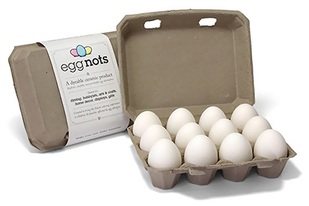
If you are raising vegan kids, you will most likely not be coloring real eggs for Easter. No problem, there are many other fun ways that kids can make and decorate “eggs”, so read on for ideas!


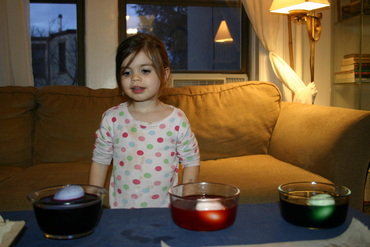
As I child, I enjoyed dropping tablets into water-filled mugs and watching the color change. Then I would dip away, and watch as the eggs went from bright white to red, yellow and green. But now, years later, knowing what I know about how millions of hens live and die for their eggs (see below), I can’t ignore the facts. For every dip, I would have visions of miserable, frightened
hens crammed into filthy, wire cages unable to even spread one wing. So I would not feel good about it and could not do it in good conscience. It's not an activity that I want my child to participate in. As a family, we try our best to vote with our dollars, and we definitely do not want to vote and in essence, give our stamp of approval for animals being treated in such cruel ways. Some traditions are better left in the past, and that is exactly where I will leave this one. 

Luckily, there are many alternatives to coloring real eggs that are just as fun, arguably even more fun! Kids can buy or make wooden, glass, paper mache, clay, paper, playdough and other eggs. They can decorate these eggs with paint, crayons, markers, chalk, fabric, beads, jewels, stickers, yarn, ribbon, foil, and other materials. You can even use natural food dyes such as beets, blueberries, saffron, cranberry juice, red wine, tumeric, raspberries, and anything else you can find in your kitchen pantry that can act as a dye. Better yet, use recycled materials found around your house and outside. This will get kids thinking creatively. You can also bake vegan cookies using an egg cookie cutter, and kids can decorate those. The ideas are endless! So be creative, and have fun. Most of all, if you are going this route, don’t apologize. Be proud that you have chosen not to do an activity (no matter how traditional it is) with your child that involves using a product that came from an animal who suffered greatly and had to pay a very high price for it. 
 
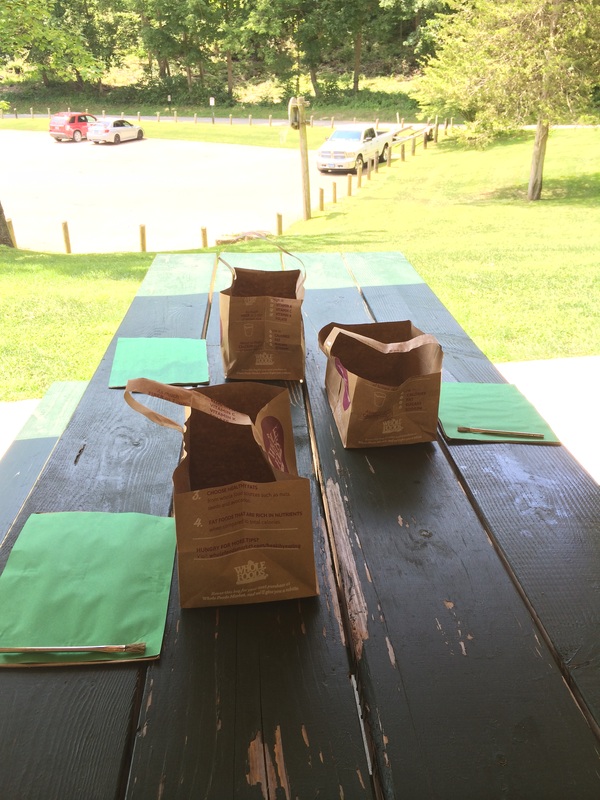
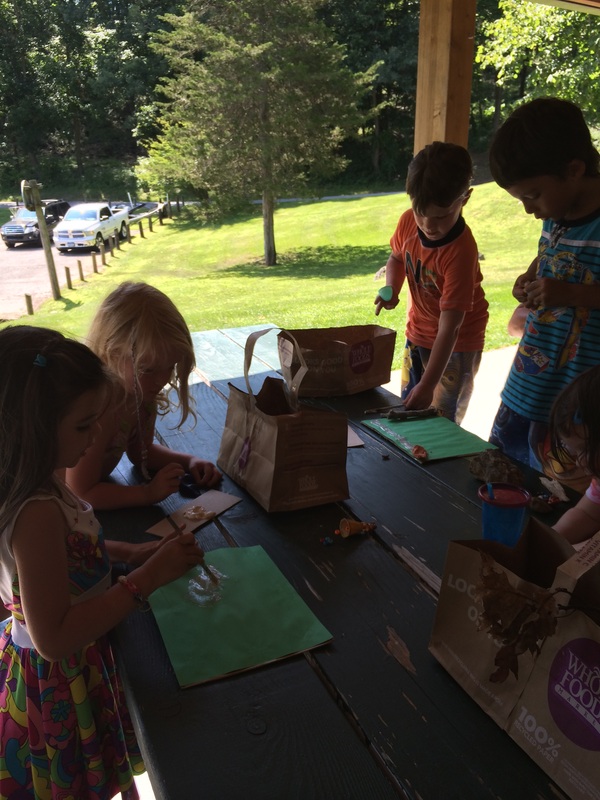
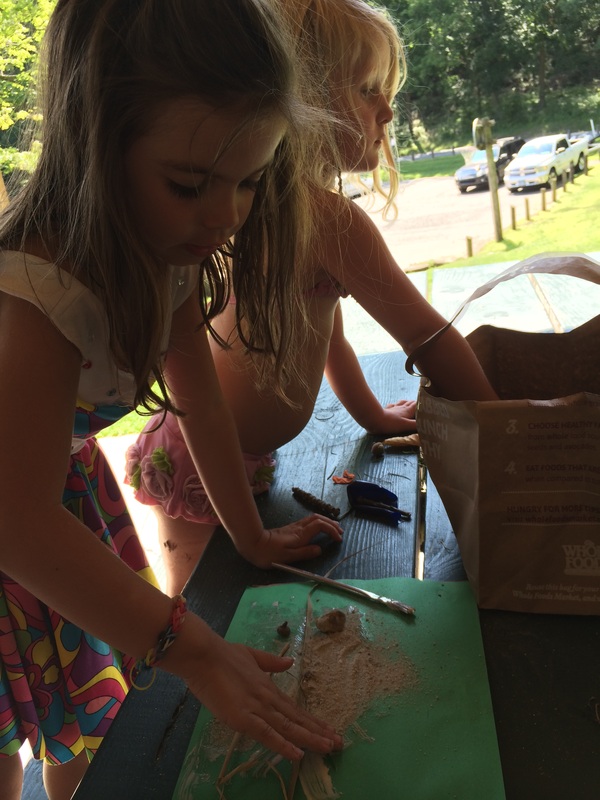
Recently, I visited one of my best friends-- she found this great recipe for clay, which she shaped into eggs, and let dry for a few days. Our kids had a great time painting them! A BIG thank you to Heidi for organizing this special activity!

Here are a few pictures of the girls painting their eggs, followed by the clay recipe so you can make it too! Enjoy! 
Picture
Elizabeth and Charlotte

CLAY RECIPE

Materials:
1cup salt
1/2 cup cornstarch
1cup boiling water
bowl
wet cloth
paint

Process:
1) Mix all ingredients in a bowl
2) Boil to a soft ball stage (until thickened). Careful not to burn--reduce heat after boiling point.
3) Knead until dough-like
4) Wrap in wet cloth to keep for a few days
5) Form the shape that you want
6) Let dry
7) Paint


Last year I wrote a guest blog post for Girlie Girl Army about the egg industry and alternatives to coloring easter eggs. Here's an excerpt:

More than 95% of all eggs sold in the U.S. (hundreds of millions) come from hens who spend their entire lives crammed into tiny, filthy
wire cages. Each hen lives her entire life in a cage with up to 10 other hens-- each hen has a space the size of a notebook piece of paper where they are unable to spread even one wing. This is their whole existence. Thousands of these cages are piled on top of one another, causing feces and urine to fall down onto the hens below. Because of the intense confinement, hens’ beaks (including sensitive cartilage, bone, and tissue) are cut off with a searing-hot blade. Some hens are in so much pain that they are unable to eat afterward, and they eventually die miserably of starvation. Hens frequently suffer from debilitating sores, bruises, and infections, and some get their limbs caught in the wire cages. None receive veterinary care (it’s too costly), and so they succumb to a slow death. Decaying bodies of those who’ve died are left to rot among the living hens in the cage. When hens’ bodies are unable to produce more eggs (the industry calls them “spent”), so the industry does what is called “forced molting”: This is a cruel and extremely inhumane practice in which hens are
kept in the dark and given no food for up to 18 days-- this shocks their bodies into another laying cycle. More eggs equal more money. By the time they are sent to slaughter, more than a quarter of all hens suffer from broken bones, and nearly all have osteoporosis because of severe calcium loss. However, these are not the only victims of the egg industry. Male chicks who neither lay eggs nor grow fast or big enough to be considered useful for their meat are considered useless and are therefore discarded. An undercover investigation at the largest hatchery in the U.S. showed innocent, confused male chicks being callously thrown alive into grinding machines, where they are dismembered and crushed, or being put into plastic bags to suffocate to death. The egg industry is a horrible business no matter which way you look at it.


For those of you wondering about free-range and cage-free eggs, those labels are not regulated, so most of the time these are just deceptive marketing claims that companies use to sell their products. For example, “cage-free” can mean that the hens are out of cages but still crammed wing to wing in a filthy, dark warehouse, and “access to outdoors” can mean they have access to a 12-inch-by-12-inch hole in the wall that leads to a dirt pen the size of your living room, but the likelihood that more than a handful of the hundreds of
hens in the warehouse will ever get out there for more than 10 minutes is very slim. Unless you are personally going to the small farm down the street to pick up your carton of eggs each week (and you have personally seen the hens and their living conditions), it’s almost guaranteed that the eggs (and all the products containing eggs) you buy in the supermarket and order at restaurants fall into the 95% of eggs obtained from factory-farmed hens. Furthermore, even if you are buying eggs from your neighbor, it still supports the eggs industry and its unethical practices, since all hens likely came from a hatchery, where “useless” male chicks are callously killed.


Picture
This is the face of battery-caged hens.
 
 
The authors of The Secret Life of Mitch Spinach give us 10 easy suggestions for encouraging kids to eat more fruits and veggies. A lot of good tips. Read and share with other parents!


So, what else can you do when your child refuses to eat anything green and seems to subsist on chicken-fingers and French fries alone? 

1)    Educate your kids about nutrition.The more they know the easier it will be to guide them into making good choices. Remember how smart kids really are. Don’t sell them short. If they enjoy sports, are interested in beauty, or want more energy, teach them how the foods they eat will help them do what matters to them most. 

2)    Make food preparation a family affair.The more you involve your kids in the preparation and selection of meals and snacks, the more willing they are to try healthy foods. Even a simple trip to the grocery store to allow them to pick out the fruits and vegetables for the week (each child in the family should get his/her own choice) can make a world of difference. Let older children find recipes online that sound good to them using healthy foods. Allow them to choose how the vegetable of the day is prepared and even help in the preparation.  

3)    Have a make-your-own smoothie party. Fill bowls with various ingredients, such as berries, mango, spinach, broccoli, flax or chia seeds, and let kids pick what they want. They can even turn the blender on! They love to be in control!

4)    Make your own salad. The same trick will work for salads. But don’t just include lettuce. Use seeds, fruit, dried peas, anything goes!

5)    Let them dip. Make a dip like hummus or use a healthy store-bought version and watch them eat string beans, carrots, celery, cucumbers, and any other veggie that you cut into strips for dipping. 

6)    Make veggie and fruit shapes. Thinly slice carrots and cucumbers and use tiny cookie cutters to make shapes. Everything is more fun when it’s in a shape (think silly bands).

7)    Make a vegetarian soup at least one night of the week. Pureed soups are great because you can’t see what’s in them (kale is easy to use this way). You’ll be amazed what they’ll eat when it’s been whizzed in the blender or  mixed with an immersion blender.

8)    Remember that food preferences are formed by one’s environment and taste is a learned phenomenon. In fact, studies show it take 8-15 times before a child accepts a new food. Try a different way of preparing the same food. Once you find a way that your child likes that food, you can branch out and experiment with it because their taste buds have already adjusted to it. Food preferences and tastes are formed early in life, so it is important to introduce your children to a variety of fruits, vegetables, and whole grains.

9)    Don't make excuses. Don't say, "My kid only eats chicken fingers." He/she is not purchasing those chicken fingers with his/her allowance. You make the rules in your house. You purchase the food. Don't buy the junk! Kids are born with survival instincts. They will not starve themselves. True hunger is difficult to deny, and when children are faced only with healthy food
options their natural hunger will drive them to eat the healthy foods available, without bribing, coercing or any other schemes. Scientific research shows that children most often take on the eating habits of their parents. Once they realize that there are no other options, they will eat, and then they will begin to change their habits. So will you. 

10)    Lead by example. If you permit only healthy foods in the house the entire family will learn to eat properly. You can't tell your children to eat broccoli while you are eating French fries. You must show them how to eat by doing it yourself. The entire family needs to eat the same foods at mealtime. The food that is being served is the only option. Include a number of choices so
that children maintain some feeling of autonomy in what they eat, but NEVER make a separate kids’ meal or allow them to order off of the kids’ menus at a restaurant. Mealtime is a communal, family time to come together. Let that attitude be reflected in the sharing of the meal. Kids’ menus are rife with terrible food. Stay away from them an order from the sides for your kids or share what you order (the portions are usually too big for one adult anyway).

--------------------------------------------------------------------------------------------------------------------------------------------------------------------------

 
The Secret Life of Mitch Spinach was written in collaboration with renowned, board-certified family physician, Joel Fuhrman, M.D., who specializes in preventing and reversing disease through nutritional and natural methods.


To get kids on the right track with healthy eating, order the Mitch Spinach book series at www.Mitchspinach.com 
BIO:
Frustrated by the lack of a healthy, smart, cool role model for their five and six year-old children, Hillary Feerick and Jeff Hillenbrand created the Mitch Spinach children’s book series. They decided to combine their expertise (Jeff holds a BS in Exercise Physiology, and
Hillary holds a BA and MA in English) to teach kids about the importance of eating healthy foods and reduce the number of children struggling with weight, chronic colds, ear infections and other nutrition-related problems.