Getting kids to eat more fruits and vegetables is a noble goal. At times, it can be challenging, but it's important for the sake of our kids' health and well-being. The creative Kia Robertson, President of I Ate a Rainbow! shares some helpful tips on how to get kids to eat at least five servings of fruits and veggies a day. A great post to share with other parents...
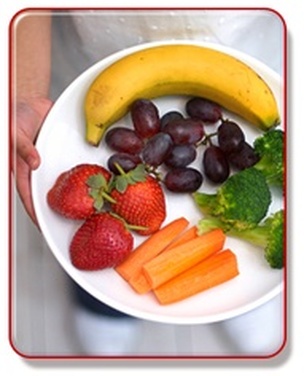


Guest post by Kia Roberston, President of Today I Ate A Rainbow!
Kids love rainbows! What's not to like, they're so bright and colourful! Did you know that you can take that love of rainbows and put it on a plate filled with fruits and vegetables?! Using a rainbow as a guide, you can ensure that your kids benefit from a wide range of vitamins, minerals and phytonutrients in their diet.

Phytonutrients are natural chemical compounds found in all plants; they protect against disease and promote health in plants and humans. Many phytonutrients also give fruit and vegetables their bright colour. By breaking produce down into colour groups of fire-engine red, bright orange, sunshine yellow, emerald green, and  rich purples you can make eating fruits and vegetables fun for your kids!  


As parents we "know" that our children should be eating at least 5 servings a day of fruits and vegetables however getting them to actually eat their fruits and veggies can sometimes be challenging!


Here are some suggestions on how to get your kids to eat their fruits and veggies:

1.
Keep Fruits and Vegetables in Sight: Stock your fridge full of washed and ready to eat fruits and veggies. 

2. Remove the Competition: If you provide only healthy options they will get eaten!  Leave the junk food for an occasional treat!

3.
Prepare Meals Together: Toddlers can wash and rip lettuce, preschoolers can measure and stir, and older kids can find recipes and help create meals. Children are far more likely to dig into a new dish if they helped prepare it!

4. Take them Grocery Shopping:  When you have the time, take your children grocery shopping with you and let them pick out a fruit or vegetable. Challenge them put a rainbow in the shopping cart!

5. Serve a Fruit or Vegetable with Every Meal: Every day and every meal, fruits and veggies should be on the menu.

6. Keep it Simple: Veggies taste best when you don’t do too much to them.  Eating them raw seems to be a favorite with kids.  

7. Be a good Role Model: If you expect your child to eat vegetables, you need to be eating them, too!

8. Eat the Same Meals: Make one meal for the family. Don’t start the habit of serving different menus for everyone as you’ll end up with a house full of picky eaters and a lot of extra work in the kitchen!!

9.  Keep trying: Kids need to be exposed to, and ideally taste, a new food as many as 10 times before they’ll accept it.  Download the free Today I Tried chart to have fun keeping track.

10. Eat A Rainbow:  Focus on providing your kids with fruits and veggies in the five main color groups of the food rainbow.  It's easy and a fun way to look at eating produce...and kids are all about FUN!


Here is a fun way to eat a rainbow:
Picture
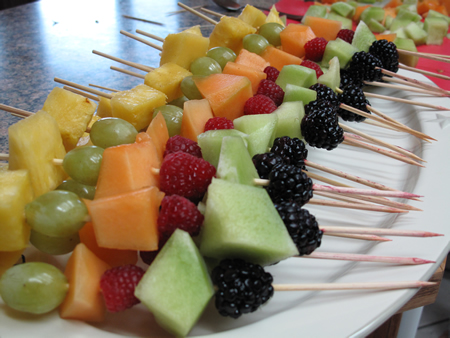
Rainbow Sticks

Rainbow Fruit Sticks
Need a colourful, tasty, healthy item to bring to your next potluck or school event?!? Try these easy to make Rainbow Fruit Sticks! 

All you need is a collection of colorful fruit and some skewers!I like to use:
Pineapple, Green Grapes, Cantaloupe, Raspberries, Honeydew Melon and Blackberries to give the skewers a nice rainbow effect.

1. Wash your fruit and let dry a little so that they are easy to work with.
2. Arrange your fruit and skewer them in the same order. (Be careful with very young kids and the skewers!)
3. Display your Rainbow Fruit Sticks on a platter and enjoy! 
 

Editor's Note
: You can order a Today I Ate A Rainbow! Kit to help kids keep track of all the different rainbow fruits and vegetables. Once they've eaten five for the day, they hit their goal. It's a fun, interactive kit that reminds kids about the importance of eating healthy fruits and vegetables.


Kia Robertson is a mom, author and the creator of the
Today I Ate A Rainbow kit; a tool that helps parents establish healthy eating habits by setting the goal of eating a rainbow of  fruits and vegetables every day.
 
 
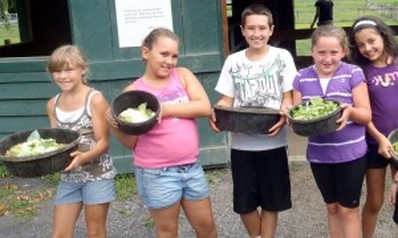
Melissa Gates, Director of Programs at Catskill Animal Sanctuary shares her recent experience teaching kids, and tells us about the wonderful Camp Kindness vegan summer camp! It's a one-week long day camp run by trained humane educators that gives kids the opportunity to interact with farm animals, while inspiring them to make kind, compassionate choices for all. Check out this one-of-a-kind camp, and register your kids-- they will love it!


Guest Post by Melissa Gates, Director of Programs at Catskill Animal Sanctuary
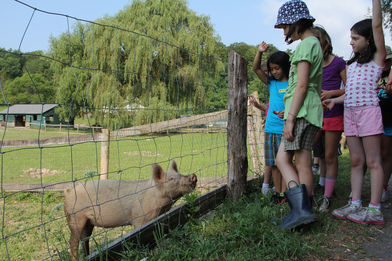
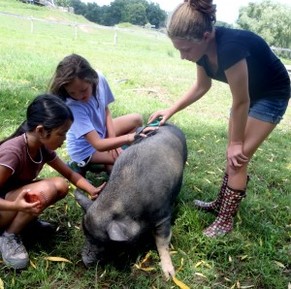
Ten Girl Scouts, ranging in age from nine to eleven years old, playfully traipsed after me in their sparkling new designer galoshes as I led them from Catskill Animal Sanctuary’s Welcome Hut around into the sloping potbellied pig field for their Volunteer Day.

“Are we going to scoop…pooooop?” asked one girl, her voice rising upward like a slide whistle accompanied by a face contorted into unspeakable crescendos.

“It would be very nice of us,” said I, raising a pitchfork to my side and motioning for the girls to circle around, “as these little loves depend upon CAS to provide them with proper affection, food, water and shelter. Part of that entails scooping up their poop every day.”

The potbellied pigs eyed the group of girls, snouts to the air and tails wagging, perhaps wondering if the day would bring treats or belly rubs or even better…both. This porcine crew knows the group volunteer gig pretty well. The shy pigs wander off to private corners, where they know we will respect their privacy. Suspicious pigs stand at a distance, smelling and rooting and planning and waiting. The extroverts wander over and introduce themselves with little nudges of their wet, sensitive noses against willing hands, legs and giggles. Shy Girl, who is, as her name implies, normally a quite timid resident at CAS, has days where she will waddle over to check out groups. Chopper, who eagerly falls over sideways at the mere suggestion of a hand heading toward his belly, can have shy days, too. Pigs, just like people and all other animals, have their moods. Today wasn’t one of those days for our friendly guy, Ozzie. He sauntered over, tail flailing a mile a minute with a clear look of warmth upon his face as his nose wiggled and pointed, smelling from girl to girl, likely anticipating his healthy dose of love and affection for the day, but not before…

One pointed finger became two then five then ten until a pitchy horror of shrieking girl chorus erupted,“EeeEEEEeeeeEEEw! He’s pooping NOW!”

At times like these, teaching moments choose us; those of us brave enough not to shy away from the challenge of poop discussions with little girls sporting designer galoshes in pink and yellow polka dots know what we must do. For those of us who make the conscious decision not to dilute the poop topic but rather to embrace the opportunity for heightened compassion, these moments are precious...even when faced with little girl squeals.

“Everybody poops, right?” I asked, looking around from surprised to disgusted to embarrassed faces. “This is Ozzie. He and other pigs are actually quite courteous when they go to the bathroom,” I continued. “When given the amount of space they need, pigs use one area for their bathroom breaks, another area for eating and yet another area for sleeping! What do you think would happen if our pig friends didn’t poop?”

“We wouldn’t have to pick it up!” exclaimed one child, affirming my theory that there really is at least one silly kid in every group.

“Hmmm. True,” I answered.“But how do you feel when you don’t go to the bathroom when you need to go?”

“Bad. My tummy aches and I feel bad if I hold it too long,” said another.

“Right; and we wouldn’t want our pig friends to feel that way, would we?” All the girls’ heads nodded no, emphatically. “Plus, what can most people do that pigs and other animals can’t, to our knowledge?”

“Excuse themselves to go to the bathroom!” hollered one girl, hand waving over her head. 
 
“That is a very astute point.” I replied. “There is something else humans can do that not many other animals can. What do you think that might be?” Hands shot up. I lifted a brow and extended an inviting hand to one girl who looked as though she might burst if she kept her answer in any longer.

“Ask their moms to drive cars to other bathrooms!” she sang out. Kids come out with the darndest things.

“Also a very good point,” I said. “So when you decide to excuse yourself or when you decideto ask your mom for help, rather than going to the bathroom on the floor, what is it you’re doing?”

“Deciding!” came a shout from one girl, who had really listened as I hung on the word decide.

“Exactly!” I encouraged,“Humans have the gift of intellect, which helps us make good decisions and come to correct conclusions about what is true or real and about how to solve problems. Other animals are smart and can learn human words and signs, and are very often effective at initiating communication and interaction with people. Animals have family units and friends; they think, feel love, suffer pain, and communicate with one another the same as we do...but in their own languages. They do not have the same level of advanced intellect that humans have, though, so in a human-powered world, this often puts animals in danger of being hurt, like if they were left out in fields full of their own poop, which would distress them and could also make them physically sick. This is one of the many kind ways in which people can take care of animals. We pick up their poop in the same way that we take care of our baby brothers’ and sisters’ poop when we help change their diapers.”

“Hey, why don’t pigs wear diapers?” asked the one quota-filling silly girl, with a practiced look of sincerity. I walked right into that one. 

The girls and I talked a little more about what it means to allow animals the dignity of their nature, to allow pigs to poop in their latrine area, to allow chickens to flap their wings, to allow cows to live free from milk machines, to allow the planet to live free from pollution, and to allow people the right to live free from wrongful discrimination. 

It wasn’t long before the girls were ambitiously scooping poop and satisfying Ozzie’s loving need for affection. They understood the good they were doing to help our pig friends, and with this newfound understanding and context of the help they were providing, the girls were happy to open their hearts to a stinky but necessary chore in order to lend a hand. The fires of compassion grew stronger in the girls’ hearts that day as their perspectives and experiences widened to include animals


I got to thinking, this really is the foundation for Catskill Animal Sanctuary’s Camp Kindness program, our vegan summer day camp for kids. At Camp Kindness, we offer kids opportunities for deciding to live with greater compassion. We provide facts about the impacts of animal-based agriculture on animals, people and the planet and we empower kids to think critically about
this wonderful world we share. Telling a child that he or she should be kind to animals is a nice start; teaching kids that they each have the power to lead lives based upon deciding to be nice to animals is a world-changing paradigm shifter.

At Camp Kindness, trained Humane Educators work closely with the small camp groups to empower each child to think freely, carefully and independently, and to arrive at their own conclusions and truths, as guided by the spirit of compassion for all. 

The age-appropriate lesson plans are mapped out well in advance of the four one-week long camp sessions, but each is molded like clay as it unfolds to meet the shifting needs of the individual kids and to positively reflect the group dynamic in order to bring out the best in each child. 

Kids are encouraged to think critically about food production issues, animal rights, the environment and their own health at Camp Kindness. One-on-one interaction with our animal friends is a key aspect of camp, enabling kids to learn about animal behavior and personalities as well as animal care. 

Kids leave camp understanding that every animal is a unique individual, which helps those who do not otherwise have an opportunity to mingle with traditionally farmed animals. Everyone leaves feeling supported and knowing that they are not alone; that feeling compassion for animals is indeed a wonderful and inspiring thing.

At
Camp Kindness, kids are presented with facts and asked to think creatively and compassionately, and they leave with plenty of tools from which to choose, from vegan cooking skills and recipes to journaling for expressing feelings to growing their own food and gaining experience with animals and getting to know the personalities of a few critters. Camp Kindness helps to reinforce what compassionate parents teach their children every day; that all animals are thinking, breathing, feeling beings worthy of our love and respect; that we may each positively impact the world by deciding to make compassionate choices; that being kind to one another, to animals and to the planet feels good!

I left CAS at the end of this Girl Scout Volunteer Day feeling a strong sense of hope for the future and really looking forward to this year’s Camp Kindness sessions. If we can encourage little girls in glittering galoshes to set aside their dislike of poop in order to lend a hand to pigs in need, we can do just about anything, including making the world a more compassionate place...one child at a time.


To learn more about Camp Kindness or register your child for a session, click here:

To learn more about other CAS programming this season, including the weekend-long Vegan Parenting Workshop in July, click
here.


Melissa Gates has directed two statewide animal rights organizations and is currently serving as the Director of Programs at the Catskill Animal Sanctuary in Saugerties, New York. She is a longtime vegan  and community organizer for animals, people, and the planet, with nearly  two decades of experience in the field. When not engrossed in her work, Melissa can often be seen out & about advocating for justice, hiking, exploring New York's live  music scene or snuggling up by her fireplace with some great jazz, a  good book & feline friends Eden-Shade, Mama Shed, Sumo Monster, Cito Mosquito Fernandez Jones & Levon Whitey Gates. 
 
 
This is one of those posts that gives me hope and a glimpse into what the future can (and should) look like. If we all start voting with our dollars, it can be a future where everyday items such as food, clothing, and personal & home products are replaced with cruelty-free vegan replicas. For example, if we can make clothes and accessories that look, feel, and function the same as those that are non-vegan, then we are on our way to a more compassionate, just world-- one that doesn't exploit animals. In this post, professional dancer, Cynthia King brings us one of these items....beautiful vegan ballet slippers! Read and share this post with other parents...

Picture
Vegan Ballet Slippers

Guest post by Cynthia King, Professional Dancer and Creator of vegan ballet slippers.
I first made the connection between the animals that I loved and the food on one’s plate years before I was a professional dancer, at age 10. It drove me to become vegetarian, then vegan. Later it guided me to create
Cynthia King Vegan Ballet Slippers
 
Dance celebrates the beauty of life. It’s true that some dancers suffer for their art, but people who do that have chosen to. Animals who suffer for the sake of performances whether because they are performing or their skins are being used for dance shoes have no say in their fate. As a dancer, and a vegan, I didn’t want any animal to suffer for the sake of my art. As a young dancer I searched for a vegan ballet slipper and had no success finding a suitable alternative. When I became a teacher, students and their parents asked me to recommend shoes--there just were no good ethical options available. That’s when I decided to create my own vegan ballet slippers. After a lengthy development process, the first shoes were ready in 2003. Today 
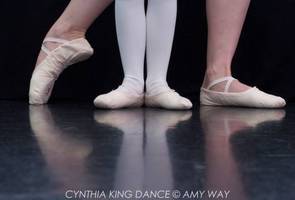
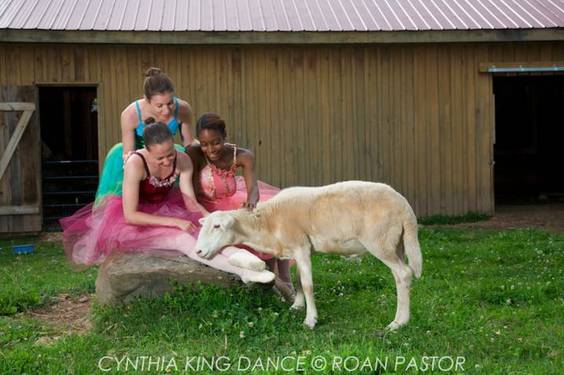
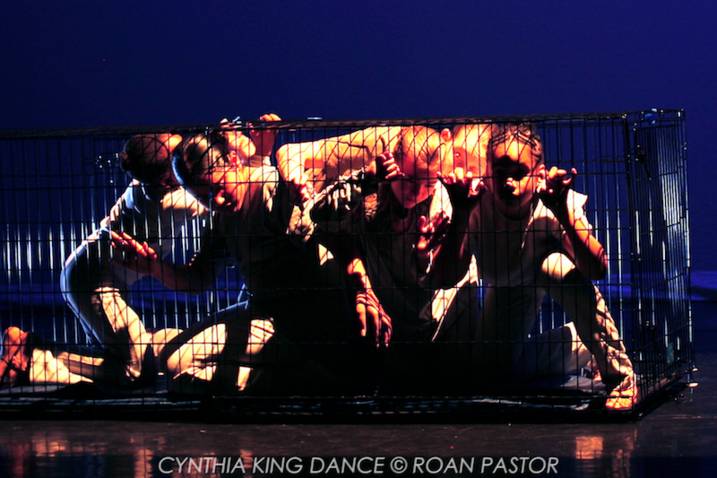
Cynthia King Vegan Ballet Slippers come in three colors (peach pink, pastel pink, and black) and are sized for children and adults, suitable for both male and female dancers. They are the only ready-to-wear vegan slippers produced worldwide, and the orders we receive from around the globe reflect that. The slippers have seen their share of the spotlight too, having been secured for Voguephoto shoots as well as being used by Alvin Ailey dance camps to outfit their campers. Not too long ago young Cynthia King Dance Studio students participated in a photo shoot (pictured below) featuring the vegan ballet slippers at Woodstock Farm Animal Sanctuary. It helped the dancers to connect the vegan slippers with the individual animals they were saving by wearing them.  It warms my heart each time an order comes in, because I know that every pair purchased means that someone has chosen compassion over cruelty. And I love seeing them on all of my young students’ feet, knowing that no animals have suffered for the sake of their dance.


Picture
Dancers with vegan ballet slippers at Woodstock Farm Animal Sanctuary.


In addition to my vegan ballet slippers, I create a lot of dance pieces at Cynthia King Dance Studio (my school in Brooklyn) that are about animals. I’ve choreographed dances that celebrate the ways animals move, and one that served as an exposeé about animals in entertainment. Recently I created a piece titled, “Dinner” in which dancers played animals on a plate and then performed as ghosts of their former selves describing in movement what it was like to be alive. I’m looking forward to staging another production in October 2012 that will again take on animal issues through the art of dance.

I’m very interested in community, as well; both participating in the ones I am a member of, and creating community at Cynthia King Dance Studio. One way of fostering community that I am especially fond of is holding vegan events at my studio. Not too long ago, I hosted “A Children’s Celebration of Farm Animals,” with children dancing as animals and author Maya Gottfried reading from her picture book, Our Farm: By the Animals of Farm Sanctuary. More recently I held a screening of Marisa Miller Wolfson’s wonderful documentary, Vegucated at the studio, followed by a reception featuring hors d’oeuvres by Brooklyn vegan restaurant, The V Spot. It was a wonderful way to bring all of my worlds together.

Editor's Note: You don't have to be a vegan to buy these vegan ballet slippers. If you care about animals, and want to help reduce their suffering one step at a time, this is a perfect way to make a difference. Order a pair for your child and be proud that you are choosing compassion over cruelty. Your kids will feel proud too!  

Cynthia King
, a professional dancer since 1978, has been teaching and choreographing for children and adults since 1986. She trained extensively at the Boston Conservatory and The Ailey School, honing her skills under the tutelage of legendary dancers including Carmen De Lavallade, and Rod Rodgers of whose dance company she was a member. Ms. King has been credited by the New York Department of Education with developing “…one of the most comprehensive dance programs in the district.”
In 2002, Ms. King launched the Cynthia King Dance Studio where her innovative curriculum embraces classical to emerging styles including ballet, tap, modern, B-boy/B-girl, and hip hop. Combining her passion for dance and compassion for animals, Ms. King developed ready-to-wear cruelty free, vegan ballet slippers. The slippers are popular worldwide and are the required slipper for two of Alvin Ailey American Dance Theater's innovative camps. Ms. King is an energetic community member and activist, having served on the Board of Flatbush Family Network, Vote Humane, and Windsor Terrace Alliance, and currently serving on the Board of Directors for Woodstock Farm Animal Sanctuary. She and the studio proudly support the PTAs of local public schools, DanceNYC, Our Hen House, Farm Sanctuary, and Animals Asia. Ms. King lives with her husband, two sons, two dogs and one cat in Kensington, Brooklyn.


This post is in honor of all mothers, specifically those suffering on factory farms.


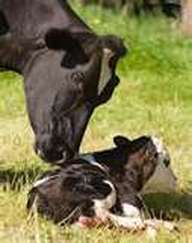
Since Mother’s Day is almost here, I thought it’d be the perfect time to write a post about some of the overlooked mothers in this country: Dairy cows.

Dairy. What a sham. Where should I start…the health issues, animal cruelty or the environmental path of destruction created by the dairy industry. Let me first start by addressing the myth that so many of us are still dearly attached to. Nearly all of the dairy cows in this country today live in filthy, cramped quarters on industrial factory farms. They don’t live on Old McDonald’s Farm in a big, red, cozy barn grazing outside on a sunny, green pasture alongside their kin. The year I became a mother myself, I wrote a blog post for PETA about dairy cows. Here’s an excerpt: 

Cows in the dairy industry live a miserable life they’re often treated as if they were nothing more than milk machines. Just like humans, cows produce milk to feed their babies. But on factory farms, the milk that cows produce goes directly to humans. The dairy industry forcefully impregnates millions of individual cows year after year to keep their milk supply flowing. They're frequently pumped full of hormones and antibiotics to increase their milk supply, as more milk equals more money. This physically demanding cycle takes a toll on the cows' health, and more than half the cows suffer from excruciatingly painful mastitis and lameness.

By the end of their lives, many of these cows are in so much pain and so weak that they can't even walk or stand, so workers callously drag them or push them with a bulldozer to a truck that is bound for the slaughterhouse. That's the thanks they get for providing humans with years of milk--a trip to the slaughterhouse to be made into ground beef. For their entire lives, cows on dairy factory farms are forced to stand indoors on concrete floors or are crammed into filthy, overcrowded feedlots. 

After being nestled in comfort and safety inside their mother for nine months, newborn calves are literally dragged away from their mothers just hours--sometimes only minutes--after entering the world. Female calves will face the same fate as their mothers: They'll replace her when her body gives out and her usefulness as a milk machine runs out. Male calves will be shackled by the neck 24/7 in a tiny crate, unable to even turn around. They are fed iron-deficient diets in order to produce the pale-colored flesh that humans prefer. The stress, loneliness, fear, and frustration that these babies must feel is heartbreaking. Then they'll be slaughtered, and their flesh, labeled as veal, will end up on a dinner plate, where the person consuming it won’t think twice about it.

Read the entire post here.


These large corporate operations manage to decrease their costs through intensively raising hundreds or thousands of animals in small spaces, while they increase revenues by pushing the cows to produce more milk at whatever physical cost to the cow. They win, and the animals lose. The consumer also loses though, because their money supports a product whose production is responsible for reeking havoc on the environment, harmful to our health, and has come from an animal who has been treated in ways that most of us would find objectionable. We end up with a huge stain on our conscience when we pay other people to do things that we couldn’t do ourselves.

The American Dietetic Association and the American Academy of Pediatrics both agree that "well-planned vegan and vegetarian diets can satisfy the nutritional needs and promote normal growth of infants and young children." So if the experts on nutrition are saying that we don’t need dairy products, there is no reason to feed your kids dairy.
The idea that milk from a cow is somehow good for the human body is a farfetched notion held together by the super glue of habit and tradition. It’s shaped our minds and formed our decisions for many years, due in large part to the massive efforts of the dairy industry. However, many studies are debunking this nutritional myth by showing that not only is cow’s milk not beneficial to our health, but there are potential health risks associated with consuming it. Steve Wynn said it best when he called it, “liquid cholesterol.”  

The Physicians Committee for Responsible Medicine (PCRM) states “…clinical research shows that dairy products have little or no benefit for bones. A 2005 review published in Pediatrics showed that milk consumption does not improve bone integrity in children. More
studies have shown that consuming cow's milk not only provides no protection against bone fractures but may also even increase one's risk of getting osteoporosis. For example, according to a new study published in the Archives of Pediatrics and Adolescent Medicine, active adolescent girls who consumed the most calcium, primarily from dairy products, had more than twice the risk of bone fractures of active girls who consumed the least calcium.

Similarly, the Harvard Nurses’ Health Study, which followed more than 72,000 women for 18 years, showed no protective effect of increased milk consumption on fracture risk. In fact, they found that those who consumed two or more glasses of milk per day had higher risks of broken hips and arms than those who drank one glass or less per day.

Also, according to a brand new
study published by the Harvard School of Public Health, “Calcium is important. But milk isn’t the only, or even best, source” and “It’s not clear, though, that we need as much calcium as is generally recommended, and it’s also not clear that dairy products are really the best source of calcium….plus, dairy products can be high in saturated fat as well as retinol (vitamin A), which at high levels can paradoxically weaken bones.” How’s that for irony? Harvard’s Healthy Eating Plate calls for us to limit our consumption of milk/dairy. Their nutrition experts claim this guide is based on sound nutrition research and not influenced by food industry lobbyists. That’s a nice change of pace for once.

If milk does the body so “good” then why is it that the countries that consume the most dairy are also the countries with the highest rates of osteoporosis- and vice versa.

Humans are the only species that drinks another species’ milk….and the only species that drinks milk past infancy into adulthood. Think about that for a minute. So why has a substance that’s meant to fatten up calves quickly become so revered as a necessary staple in households around the world. Could it have something to do with the billion-dollar marketing campaign that the dairy industry has conveniently marketed to us (and schools, gov'ts, doctors, etc) , and the entanglement of the USDA with our government/schools. If it is calcium and Vitamin D that we’re all after, there are far better sources that don’t involve housing tons of animals in warehouses and destroying the environment. So if you’re still consuming milk and other dairy products, consider kicking the dirty habit. If you compare a carton of cow’s milk to any of the alternative non-dairy milks on the market including soy, rice, almond or coconut milk, you’ll find that in terms of calcium and Vitamin D, they all contain at least the same amount as cow’s milk, and in fact, many actually contain more. Plus, non-dairy milks are usually fortified with high doses of other important vitamins and nutrients including iron and B12. Other good, non-dairy sources of calcium include collards, bok choy, spinach, fortified juices, beans.

So that being said, why would you still want to consume cow’s milk? There’s really no excuse…other than you can’t get past your childhood experiences, and the brainwashing marketing ads that have been telling us for years that we need milk for our bones. That being said, I know how hard it can be to break away from the norm. It’s not easy to flip everything you know upside down. Parents especially want the best for their kids, so we’re relying on others, who we think are experts.  As kids many of us have been raised on glasses of milk at dinner, and hunks of cheese for snacks, so it’s hard to envision giving that up. But habit doesn’t make right or truth, so do your own research about the dairy industry…don’t let the industry itself determine what your body does and doesn’t need.  

Picture
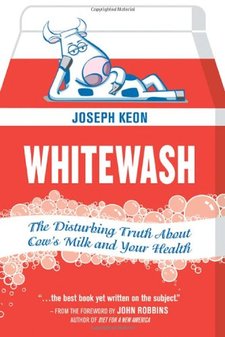
Whitewash: The Disturbing Truth about Cow's Milk and Your Health by Dr. Joseph Keon.

Need help making the transition? Start by reading
Whitewash: The Disturbing Truth about Cow’s Milk and Your Health by nutritionist Dr. Joseph Keon. In it, he unveils how we unwittingly sabotage our health every day by drinking milk, and he shows that our obsession with calcium is unwarranted. I also highly recommend a book written by the son of the founder of Baskin-Robbins, John Robbins, who wrote, Diet for a New America. Despite having grown up around an ice cream empire (including having an ice-cream shaped pool!), he now espouses dairy and advises everyone to avoid dairy. 

Also, check out
GoDairyFree.org and NotMilk.com for more resources.

Mother’s Day is the perfect time to show your support of all mothers. You can do this by ending your support of the dairy industry, which treats mother cows (and their babies) as commodities. 

HAPPY Mother’s Day to ALL! 
 
 
It's usually the parents who are writing blogs about raising vegetarian/vegan kids, so it's nice once in a while to flip the tables and hear directly from the young people themselves. I had the pleasure of interviewing Owen Ford-- a kind, smart, courageous, passionate teenage-girl who is making a difference for animals. Her parents should be very proud! Here are some of her thoughts on what it's like to be a vegan teenager.


Picture
Owen


Interview with Owen Ford, a vegan teenage-girl:

How old are you?
    I'm seventeen.

What age did you become vegan, and why?
    
I’ve been a vegetarian since second grade, when I began to get grossed out by meat. At that time, my Mom was a pescatarian, and while my Dad ate meat, both were very supportive. Then, when I was thirteen (almost fourteen), I learned about veganism. I had heard of it before but never knew much about it. After watching a DVD about food (I think it was one of Dr. McDougall’s), I went vegan overnight. The diet and lifestyle just made total sense to me, an animal lover and nature enthusiast since birth.

How did your parents react when you told them? How did your friends react?
    
My parents were super supportive. My friends had a lot of questions, and while they might not agree with it, they’re also supportive. I often make vegan desserts for them which helps a lot!
 
Are there other vegetarians and vegans in your school?
   
 I’ve actually been homeschooled since 7th grade, but when I was in public school, I was teased for not eating meat. However, all of the teens I’ve met since then have been kind and curious about my diet, and I know many vegans and  vegetarians.

How veg-friendly is your community (do restaurants and grocery stores offer veg products)?
    
The small town I live in is not even close to veg*n-friendly, but a nearby larger city is! They have restaurants with vegan options, and one even has a vegan and vegetarian buffet on Saturday nights. Many grocery stores have organic, gluten free, and veg*n sections, too.

Do you have any favorite vegan beauty products?
    Yes! I love Eco Lips’ Bee Free Vegan Lip Balm and Nature’s Gate products.  

What vegan issue is most important to you (i.e. fur, food, animal testing, etc.)?
    
All of them! I really care about animal welfare and animal rights. I’ve been told I don’t support animal rights since I have pets, but I think that’s false. I just believe that every creature has a right to be treated decently no matter what species, breed, age, color, or gender it is. Plain and simple.

Have you ever visited a Farm Sanctuary, if so which one?
  
  I have not, but I would really like to!

Have you read any vegan books?
    I’ve read Vegan Freak: Being Vegan in a Non-Vegan World, Vegan with a Vengeance, and many other vegan cookbooks. I’d really love to read more, though!


What do you think the future of the vegan movement is…? 
    
I think it’s just going to keep progressing until we’re no longer the minority! I feel like the more people hear about it and the more people learn about it, the sooner it’ll be acceptable and normal and encouraged!

Can you give a few examples of some of the food you eat?
    I eat a TON of fresh fruit! We make a lot of quinoa, bean, and vegetable salads, too. I love nachos, pizza, cookies, and pb&j sandwiches! I eat a pretty good balance of healthy vegan food and “junk” vegan food. My favorite dish right now is lasagna made of lasagna noodles, polenta, eggplant, portabellas, spinach, garlic, onions, tomato sauce, and Chreese sauce! We’re still perfecting the recipe for out tastes, but it’s delicious! We used this recipe here:
http://blog.fatfreevegan.com/2007/02/polenta-lasagna-with-portabellas-and.html

What’s your favorite food?
    
Strawberries dipped in chocolate! Or Mexican food. 

If you were giving a presentation on veganism to other teens, what is something important that you would say, or want them to know?
    
I would tell other teens that it’s not un-cool or lame to be a vegan, that it’s actually REALLY cool to stand up for what you believe in and to help others do the same!

Do you have an animal-advocate/vegan icon, or someone you look up to? 
    
For inspiration Nathan Winograd for sure! I'm all for a No Kill Nation!
 
Do you currently, or have you ever done any animal activism (protests, letter writing, leafleting, etc)?
     
Yes, I have! I leafleted once for Mercy For Animals and I've raised money for World Wildlife Fund and the Forever Home Feline Ranch. I also foster kittens and volunteer for multiple rescues. 
 
What would you say to vegetarians who haven't yet made the switch to veganism?
   
 I would tell them that vegetarianism is an amazing choice, and veganism is even better! I would help them learn about the dairy and egg industries' cruel practices, the delicious vegan food, and the positive impact their choice would make.
 
What is the hardest part about being a vegan teen?
    It’s really hard to not be able to order whatever I want off of a menu, and it can be hard to be around people who don’t support or understand your diet.

What is the best thing about being a vegan?
    Everything! The food, the health, the compassion. I love being part of something positive!

What are your summer plans?
     I'm going to be staying with my best friend and her family for three months this summer along with going to Youth Empowered Action Camp!


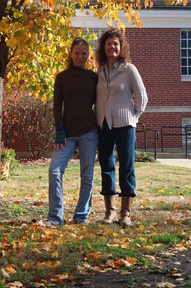
Owen and her Mom...


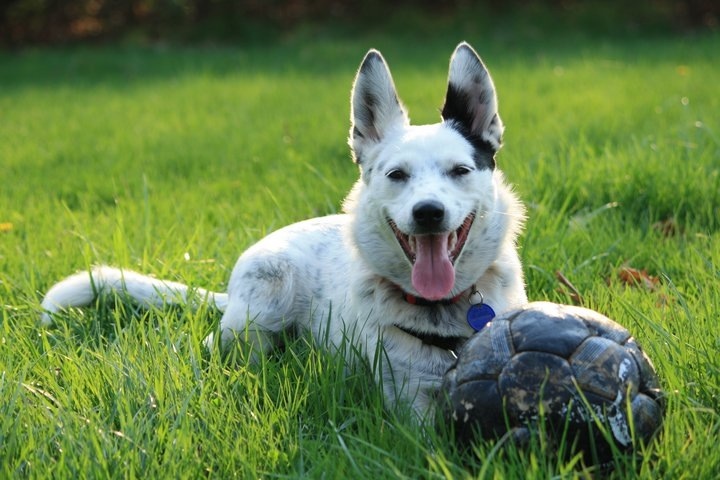
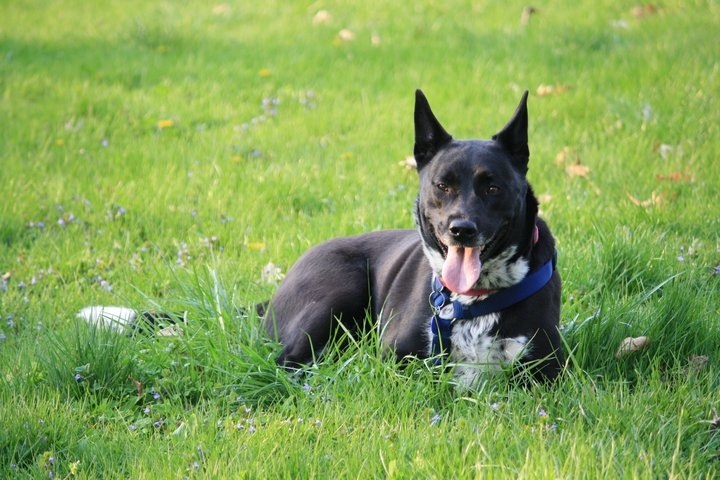
Owen's companion animals... Bella Luna and Sarah


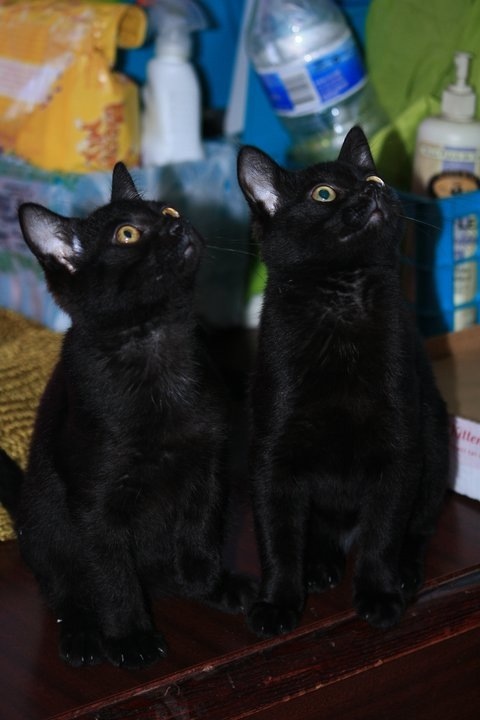
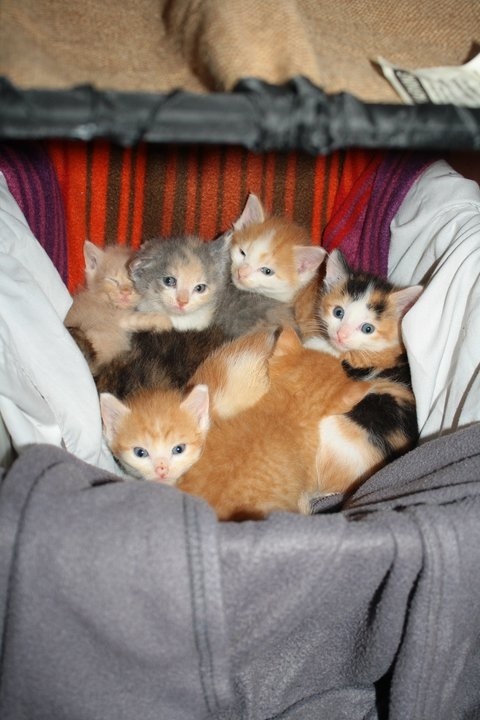
....and some of the kittens she's fostered.
_

A BIG thank you to Owen for sharing her perspective with us. She is not only an inspiration to others her age, but also a huge inspiration to the adults out there who are raising compassionate, vegetarian/vegan kids. You are the future!